











News
The man new to being in a human form can be bound in a straight-jacket in two ways, namely, his unwillingness to sublimate his energy into a socially acceptable activity like sport or art, and his unwillingness to be true to his own sexual preferences. He will see sport as not giving enough to his personal self or ‘kingly’ persona, involving too much authentic camaraderie, as well as being too sacrificial to ‘the people’, while he will see art as something done by ‘weird’, feminine men. The choice of homosexuality will not be allowed, his stored memories of what should done is based on his recent lives in the Animal Kingdom.
Leon Lester
Neptune is the planet of dissolution, mysticism and spiritual oneness. The higher octave of Venus, Neptune brings love and beauty to a higher, more spiritual level.
A Meditation
by Leon Lester
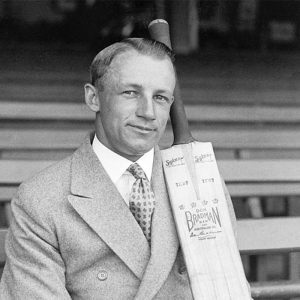
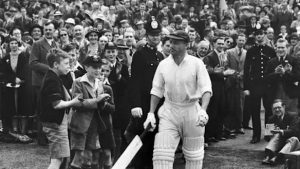
Sir Donald Bradman’s famous practice drill with a golf ball and a cricket stump trained his nervous system to perform “motion extrapolation,” a scientific process where the brain effectively calculates and reacts to where a fast-moving object will be fractions of a second in the future. The phrase “seeing the future” in connection with Sir Donald Bradman refers to a neuroscience concept about how elite athletes predict motion, as well as his legendary practice habits and sharp foresight regarding the game of cricket.
The most pertinent question of our times is are Colonialist ghosts more common than Indigenous ghosts?
Leon Lester
The ‘Closet’ Homosexual is being sadistic to himself and invariably will be to others.
Leon Lester
Pic: Andre Richer-Pearce


It can be advantageous among the stupid to be wicked.
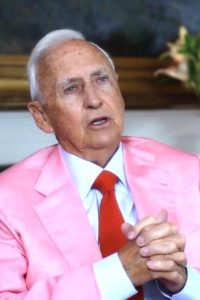
Ramsay Health Care was founded in Sydney in 1964 by the late Australian businessman and philanthropist Paul Ramsay AO. He started with a single 16-bed private psychiatric hospital in Sydney (Warrina House).
Leon Lester
The world exists in parts so someone can develop your part and you can develop their’s.
Leon Lester
It doesn’t matter if they are black or white, the bombs are always black.
Leon Lester
Life is like sex – there is a rhythm.
Leon Lester
Who is that ‘stranger’ you see on street? You.
Leon Lester
Save humans not a planet?
Leon Lester
Time is not important to energy or a state.
Leon Lester
Without controversy there is no change.
Leon Lester
People will develop your energy through victimising you.
This is like the process of the Christ on the cross.
They must feel your pain to understand you and develop their own internal “you”.
Leon Lester
People want to kill the Devil. They have been fighting against him for years. But they can not defeat him. We must accept the Devil is eternal.
Leon Lester
Truth seeking is the last thing to quit.
Leon Lester
What else is there to know when you know the truth? You can quit seeking.
Be a quitter.
Leon Lester
Islam, Prince Charles and Jobs/Jandali
One response to the far-right has been made by the current King of England, Charles.
For those who have lost Christianity and gained only materialism, then the next step is the New Age embodying the best of all religions. Evangelical Christianity, like that delineated in the Hillsong Organisation, are only presenting a superficial experience of the Holy Bible for those that are not precise like Ex-PM Scott Morrison, of the far-right.
Leon E Lester
Psychic Medium & Astrology
https://www.youtube.com/watch?v=Y4V5iWCBR4E
Steve Jobs (Apple) and Islam
Steven Paul Jobs (February 24, 1955 – October 5, 2011) was an American businessman, inventor,[2] and investor. A pioneer of the personal computer revolution of the 1970s and 1980s, Jobs co-founded Apple Inc. with his early business partner Steve Wozniak as Apple Computer Company in 1976. After the company’s board of directors fired him in 1985, he founded NeXT the same year and purchased Pixar in 1986, becoming its chairman and majority shareholder until 2007. Jobs returned to Apple in 1997 as CEO, where he was closely involved with the creation and promotion of many of the company’s most influential products until his resignation in 2011.
Steven Paul Jobs[6] was born in San Francisco, California, on February 24, 1955, to Joanne Carole Schieble and Dr. Abdulfattah “John” Jandali (Arabic: عبد الفتاح الجندلي).[7] Abdulfattah Jandali was born in a Muslim household to wealthy Syrian parents, the youngest of nine siblings. After obtaining his undergraduate degree at the American University of Beirut, Jandali pursued a PhD in political science at the University of Wisconsin. There, he met Joanne Schieble, an American Catholic of Swiss-German descent whose parents owned a mink farm and real estate in Green Bay. The two fell in love but faced opposition from Schieble’s father due to Jandali’s Muslim faith. When Schieble became pregnant, she arranged for a closed adoption, and travelled to San Francisco to give birth.
Schieble requested that her son be adopted by college graduates. A lawyer and his wife were selected, but they withdrew after discovering that the baby was a boy, so Jobs was instead adopted by Paul Reinhold Jobs and his wife, Clara. Paul Jobs, an American of German descent, was the son of a dairy farmer from Washington County, Wisconsin. After dropping out of high school, Paul Jobs worked as a mechanic, then joined the US Coast Guard. After he was discharged in San Francisco, Paul married Clara Hagopian, of Armenian descent, in February 1946, and they moved to Wisconsin, then to Indiana, where Paul worked as a machinist and later as a car salesman. Since Clara missed San Francisco, she convinced Paul to move back. There, Paul worked as a repossession agent, and Clara became a bookkeeper. In 1955, after having an ectopic pregnancy, the couple looked to adopt a child. Since they lacked a college education, Schieble initially refused to sign the adoption papers and went to court to request that her son be removed from the Jobs household and placed with a different family but changed her mind after Paul and Clara promised to pay for their son’s college tuition.
The surname Jobs is derived from the biblical personal name Job (Hebrew Iyyob).
How many were there? Clinton, Jones, Flowers, Lewinsky and the Impeachment House of Representatives voted for.
After graduating from Yale Law School, Clinton returned to Arkansas and became a law professor at the University of Arkansas.
Clinton worked with future two-term mayor of Dallas Ron Kirk, future governor of Texas Ann Richards, and then unknown television director and filmmaker Steven Spielberg.
Clinton was elected Governor of Arkansas in 1978, having defeated the Republican candidate Lynn Lowe, a farmer from Texarkana. Clinton was only 32 years old when he took office, the youngest governor in the country at the time and the second youngest governor in the history of Arkansas. Due to his youthful appearance, Clinton was often called the “Boy Governor”.
Also in the 1980s, the Clintons’ personal and business affairs included transactions that became the basis of the Whitewater controversy investigation, which later dogged his presidential administration. After extensive investigation over several years, no indictments were made against the Clintons related to the years in Arkansas.
Clinton was accused by Gennifer Flowers to have used cocaine as governor and his half-brother Roger was sentenced to prison in 1985 for possession and smuggling of cocaine, but was later pardoned by his brother after serving his sentence. During his time in Arkansas, there were also other scandals such as the Whitewater controversy involving the Clintons’ real estate dealings, and Bill Clinton was accused of serious sexual misconduct in Arkansas, including allegations of using the Arkansas State Police to gain access to women (Troopergate affair). The killing of Don Henry and Kevin Ives in 1987 started various conspiracy theories that accused Clinton and the Arkansas state authorities of covering up the crime.
Clinton was still the governor of Arkansas while campaigning for U.S. president, and he returned to his home state to see that Ricky Ray Rector would be executed. After killing a police officer and a civilian, Rector shot himself in the head, leading to what his lawyers said was a state where he could still talk but did not understand the idea of death. According to both Arkansas state law and federal law, a seriously mentally impaired inmate cannot be executed. The courts disagreed with the allegation of grave mental impairment and allowed the execution. Clinton’s return to Arkansas for the execution was framed in an article for The New York Times as a possible political move to counter “soft on crime” accusations.
Paula Corbin Jones (born Paula Rosalee Corbin; September 17, 1966) is an American civil servant. A former Arkansas state employee, Jones sued United States president Bill Clinton for sexual harassment in 1994. In the initial lawsuit, Jones accused Clinton of sexual harassment at the Excelsior Hotel in Little Rock, Arkansas, on May 8, 1991. Following a series of civil suits and appeals through the U.S. District Court and the U.S. Court of Appeals from May 1994 to January 1996, Clinton v. Jones eventually reached the United States Supreme Court on May 27, 1997. The case was later settled on November 13, 1998.
The Paula Jones case provided the impetus for Independent Counsel Ken Starrto broaden his ongoing investigation into Clinton’s pre-presidency financial dealings with the Whitewater Land Company, and resulted in Clinton’s impeachment in the House of Representatives and subsequent acquittal by the Senate on February 12, 1999. Specifically, Clinton was asked under oath about Monica Lewinsky in the Jones suit, denied having ever had sexual relations with her, and was accused of perjury after evidence of sexual contact was exposed. The Jones lawsuit also led to a landmark legal precedent by the U.S. Supreme Court which ruled that a sitting U.S. president is not exempt from civil litigation for acts committed outside of public office.
Jones’s suit was dismissed as lacking legal merit prior to Clinton’s impeachment and the exposure of the Lewinsky affair. But in August 1998, Clinton’s relationship with Lewinsky, and compelling evidence that he had lied about it under oath in the Jones suit, was brought to light. At that point Jones appealed the ruling, and her appeal gained traction following Clinton’s admission to having an affair with Lewinsky in August 1998.
On appeal, Clinton agreed to an out-of-court settlement, paying Jones and her lawyers $850,000 to drop the suit. Clinton’s lawyer said that the President made the settlement only so he could end the lawsuit for good and move on with his life. Jones and her lawyers said that the payment was evidence of Clinton’s guilt.
Jones continues to maintain that Clinton sexually harassed her. Clinton continues to deny it.
In a declaration sworn under penalty of felony, Jones alleged that, on May 8, 1991, while working on official business in her capacity as a state employee of the AIDC, she attended the Annual Governor’s Quality Conference at the Excelsior Hotel in Little Rock. Jones alleged she was asked by an Arkansas State Police Trooper to report to Arkansas Governor Clinton’s hotel room in the Excelsior. Hotel (later the Little Rock Marriott), where Clinton propositioned and exposed himself to her. She claimed she kept quiet about the incident until 1994, when a David Brock story in The American Spectator magazine printed an account. Jones filed a sexual harassment suit against Clinton on May 6, 1994, two days before the expiration of the three-year statute of limitations, and sought $750,000 in damages.
In December 1997, Jones reduced the damages sought in her suit against Clinton to $525,000 and agreed to remove Clinton’s co-defendant and former bodyguard, Danny Ferguson, from the suit.
In December 1994, federal judge Peter K. Leisure ordered Penthouse magazine not to distribute semi-nude photographs of Jones that had been taken by her ex-boyfriend Mike Turner.
Gennifer Flowers (born January 24, 1950) is an American author, singer, model, actress, former State of Arkansas employee, and former TV journalist. In January 1998, President Bill Clinton testified under oath that he had a sexual encounter with Flowers. Flowers published her memoir Gennifer Flowers: Passion and Betrayal in 1995. In it, she stated she was a sexual encounter at the time of her alleged relationship with Clinton.
In December 1996, Flowers talked about her sexual relationship with Clinton on The Richard Bey Show. The show was canceled the following day. Bey later attributed a direct connection between the two consecutive events.
In a deposition in January 1998, while denying Kathleen Willey’s sexual accusations against him, Clinton admitted that he had a sexual encounter with Flowers. In his 2004 autobiography My Life, Clinton acknowledged testifying under oath that he had a sexual encounter with Flowers. He stated it was only on one occasion in 1977
Jones’s lawyers decided to show to the court a pattern of behavior by Clinton that involved his allegedly repeatedly becoming sexually involved with state or government employees. Jones’s lawyers therefore subpoenaed women they suspected Clinton had had affairs with, including Arkansas Appeal Tribunal employee Gennifer Flowers, as well as White House employee Monica Lewinsky. In his deposition for the Jones lawsuit, Clinton denied having “sexual relations” with Monica Lewinsky. Based on testimony provided by Linda Tripp, which identified the existence of a blue dress with Clinton’s semen on it, Kenneth Starr concluded that Clinton’s sworn testimony was false and perjurious.
During the deposition in the Jones case, Clinton was asked, “Have you ever had sexual relations with Monica Lewinsky, as that term is defined in Deposition Exhibit 1, as modified by the Court?” The judge ordered that Clinton be given an opportunity to review the definition. It said that “a person engages in sexual relations when the person knowingly engages in or causes contact with the genitalia, anus, groin, breast, inner thigh, or buttocks of any person with an intent to arouse or gratify the sexual desire of any person”. Clinton flatly denied having sexual relations with Lewinsky. Later, at the Starr Grand Jury, Clinton stated that he believed the definition of sexual relations agreed upon for the Jones deposition excluded him receiving oral sex.
It was upon the basis of this statement that the House of Representatives voted to impeach Clinton on December 19, 1998, on charges of perjury and obstruction of justice. Clinton was subsequently tried before the Senate and acquitted of both charges on February 12, 1999.
Death Penalty
According to some sources, Clinton was a death penalty opponent in his early years, but he eventually switched positions.However he might have felt previously, by 1992, Clinton was insisting that Democrats “should no longer feel guilty about protecting the innocent”. During Clinton’s final term as governor, Arkansas performed its first executions since 1964 (the death penalty had been reinstated in 1976). As governor, he oversaw the first four executions carried out by the state of Arkansas since the death penalty was reinstated there in 1976: one by electric chairand three by lethal injection.To draw attention to his stance on capital punishment, Clinton flew home to Arkansas mid-campaign in 1992, in order to affirm in person that the controversial execution of Ricky Ray Rector would go forward as scheduled.
The Right-Wing of Australia
Rose Porteous (born Rosario Magdalena Teresita Lacson on 26 October 1948), is a Filipino-born Australian socialite, best known for her marriage to Western Australia iron ore mining magnate Lang Hancock, and the protracted legal battle with his daughter, Gina Rinehart, over the circumstances that led to his death, and the distribution of his estate. The action, commenced by Rinehart in 1992, was eventually settled in 2003 following a coronial inquiry that determined Hancock died of natural causes. Porteous, who lives in Perth and Melbourne, is often referred to by the media as a socialite. Hancock’s daughter, Gina Rinehart, was bitterly opposed to Hancock’s relationship with Porteous. The conflicts between Rinehart and Porteous overshadowed his final years and continued until more than a decade after his death.On 25 June 1992, less than three months after Hancock’s death, Porteous married for the fourth time, to Hancock’s long-time friend William Porteous. Rinehart was indignant at the haste with which her stepmother had remarried. Gina Rinehart has never apologised for her father and benefactor’s call to sterilise Aboriginal Australians and ‘breed them out’. She is universally loathed as an example of sickening wealth and greed by the majority of working Australians while avoiding taxes and repressing wage growth where ever possible. Hancock also offered strong advice to the politicians he favoured. In 1977 he sent a Telex to the then-Treasurer of Australia Sir Phillip Lynch, telling him he needed to “stop money coming in to finance subversive activities, such as Friends of the Earth, which is a well-heeled foreign operation.” He also suggested to Bjelke-Petersen that the Federal Government should attempt to censor the works of Ralph Nader and John Kenneth Galbraith, lest they “wreck Fraser’s government”.In 1969 Hancock and his partner Peter Wright commenced publication in Perth of a weekly newspaper, The Sunday Independent, principally to help further their mining interests. Faced with strong competition, the newspaper is thought never to have turned a profit, Hancock largely relinquishing his interest in it in the early 70s and Wright selling it to The Truth in 1984. Hancock was a staunch proponent of small government and resented what he considered to be interference by the Commonwealth Government in Western Australian affairs. He declared before a state Royal Commission in 1991 that “I have always believed that the best government is the least government”, and that “Although governments do not and cannot positively help business, they can be disruptive and destructive.” Hancock bankrolled an unsuccessful secessionist party in the 1970s, and in 1979 published a book, Wake Up Australia, outlining what he saw as the case for Western Australian secession. The book was launched by Gina Rinehart and Bjelke-Petersen. Hancock also offered strong advice to the politicians he favoured. In 1977 he sent a Telex to the then-Treasurer of Australia Sir Phillip Lynch, telling him he needed to “stop money coming in to finance subversive activities, such as Friends of the Earth, which is a well-heeled foreign operation.” He also suggested to Bjelke-Petersen that the Federal Government should attempt to censor the works of Ralph Nader and John Kenneth Galbraith, lest they “wreck Fraser’s government”. In 1969 Hancock and his partner Peter Wright commenced publication in Perth of a weekly newspaper, The Sunday Independent, principally to help further their mining interests. Faced with strong competition, the newspaper is thought never to have turned a profit, Hancock largely relinquishing his interest in it in the early 70s and Wright selling it to The Truth in 1984.Hancock was a staunch proponent of small government and resented what he considered to be interference by the Commonwealth Government in Western Australian affairs. He declared before a state Royal Commission in 1991 that “I have always believed that the best government is the least government”, and that “Although governments do not and cannot positively help business, they can be disruptive and destructive.” Hancock bankrolled an unsuccessful secessionist party in the 1970s, and in 1979 published a book, Wake Up Australia, outlining what he saw as the case for Western Australian secession. The book was launched by Gina Rinehart and Bjelke-Petersen. Bjelke-Petersen earned himself a reputation as a “law and order” politician with his repeated use of police force against street demonstrators[8] and strongarm tactics with trade unions, leading to descriptions of Queensland under his leadership as a police state. Starting in 1987, this administration came under the scrutiny of a royal commission into police corruption and its links with state government ministers. Bjelke-Petersen was unable to recover from the series of damaging findings and after initially resisting a party vote that replaced him as leader, retired from politics on 1 December 1987. Two of his state ministers, as well as the police commissioner Bjelke-Petersen had unusually appointed from a junior Inspector rank, and then later knighted, were jailed for corruption offences and in 1991 Bjelke-Petersen, too, was tried for perjury over his evidence to the royal commission; the jury failed to reach a verdict as the jury foreman was a member of the Young Nationals and a member of the “Friends of Joh” group, and Bjelke-Petersen was deemed too old to face a second trial. Bjelke-Petersen was widely regarded as corrupt and used threats of defamation writs to quell reporting of allegations. Langley (“Lang”) Hancock was born on 10 June 1909 in Leederville, Perth, Western Australia. He was the eldest of four children born to Lilian (née Prior) and George Hancock. His mother had been born in South Australia and his father in Western Australia. His father’s great-aunt was Emma Withnell, while a cousin was Sir Valston Hancock. On 4 August 1947, he married his second wife, Hope Margaret Nicholas, the mother of his only acknowledged child, Gina Rinehart. He and Hope remained married for 35 years, until her death in 1983 at the age of 66. In 2012, Hilda Kickett, who had long claimed to be Lang Hancock’s illegitimate daughter, claimed that the late mining magnate had had an illicit affair with an Aboriginal cook on his property at Mulga Downs, resulting in her conception.Those claims have not been corroborated. Rinehart was born in Perth, Western Australia, and spent her early years in the Pilbara region. She boarded at St Hilda’s Anglican School for Girls and then briefly studied at the University of Sydney, dropping out to work with her father at Hancock Prospecting. She was Lang Hancock’s only child, and when he died in 1992 she succeeded him as executive chairwoman. Rinehart oversaw an expansion of the company over the following decade, and due to the iron ore boom of the early 2000s became a nominal billionaire in 2006. In the 2010s, Rinehart began to expand her holdings into areas outside the mining industry. She made sizeable investments in Ten Network Holdings and Fairfax Media (although she sold her interest in the latter in 2015), and also expanded into agriculture, buying several cattle stations, divesting them within a decade. Rinehart is Australia’s richest person. Her wealth reached around A$29 billion in 2012, at which point she overtook Christy Walton as the world’s richest woman and was included on the Forbes list of The World’s 100 Most Powerful Women. Bond University awarded Rinehart an honorary doctorate in 2013 “in recognition of her commitment and contribution to the Australian economy and wider community.” Bond University was established and funded in 1987 by the chairman of Bond Corporation, Alan Bond, the president of the Japanese-based Electronics and Industrial Enterprises International (EIE), Harunori Takahashi and Dr Taro Tanioka, in a joint venture to manage the land and construction of the buildings of the university. Alan Bond (22 April 1938 – 5 June 2015) was a UK-born Australian businessman noted for his high-profile and often corrupt business dealings. These included his central role in the WA Inc scandals of the 1980s; the biggest corporate collapse in Australian history; and also his criminal conviction that saw him serve four years in prison. Bond was released from Karnet Prison Farm in 2000, having served four years in various Western Australian prisons. In real life, Bond was represented by criminal lawyer Andrew Fraser, notable for representing Australian underworld figures and other unsavoury elements. Fraser himself would later become imprisoned. In 1955, Bond married Eileen Hughes, a member of a prominent Catholic family in Fremantle (she is a cousin of car dealer John Hughes). She and Bond were both 17, and she was pregnant at the time. Bond, who had been raised Protestant, converted to Catholicism for the marriage.The couple had four children: John, Craig, Susanne and Jody. Bond and Eileen divorced in 1992.Susanne, an equestrian show jumper who had been a member of the Australian show jumping team for seven years, died in 2000 from a suspected accidental overdose of prescription medication. Bond married Diana Bliss, a public relations consultant and theatre producer, in 1995. On 28 January 2012, Bliss was found dead in the couple’s swimming pool. Police said the circumstances of her death were not suspicious and concluded that Bliss, a long-time sufferer of depression, had committed suicide.
